
When the Software Does Not Fit the Business, Build Around the Business.
A practical guide to custom business software, ERP systems, inventory platforms, portals, dashboards, databases, integrations, workflow applications, and purpose-built digital solutions for businesses in Bacolod and Negros Occidental.
Most businesses should not build custom software simply because custom software sounds impressive. Existing applications are often cheaper and faster when they already solve the problem well. But some companies eventually reach a point where employees are working around software instead of software working around the business. They maintain several spreadsheets, duplicate information between platforms, use chat messages as approval records, and adapt operations just to fit the limitations of existing tools. That is where custom software development in Bacolod can become a strategic option.
The better question is: “Should we build it?” Custom software creates the most value when the business has a clear problem, a repeatable workflow, requirements that existing solutions cannot handle efficiently, and enough operational value to justify development.
What Is Custom Software Development?
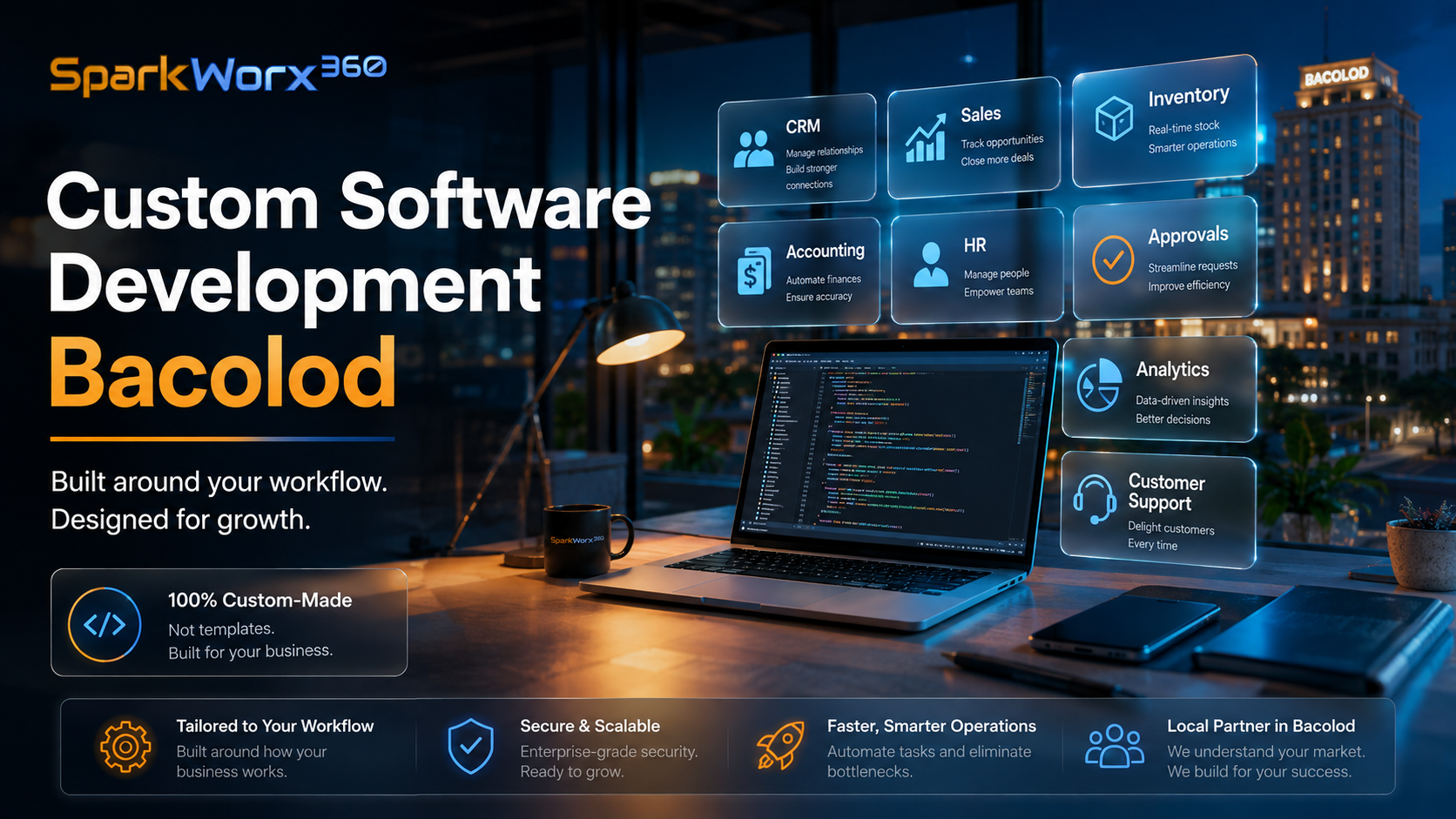
Custom software is a digital application designed around the specific requirements of a business or organization. Unlike generic off-the-shelf software, its workflows, user roles, calculations, reports, permissions, records, and integrations can be structured around the way the organization actually operates.
A custom system may be a web application used through a browser, an internal employee portal, an inventory system, an ERP platform, a customer portal, a property-management application, a school or clinic system, an ordering platform, a reporting dashboard, or a specialized application built around a unique operating model.
How to Develop Custom Business Software
Examples of Custom Business Systems
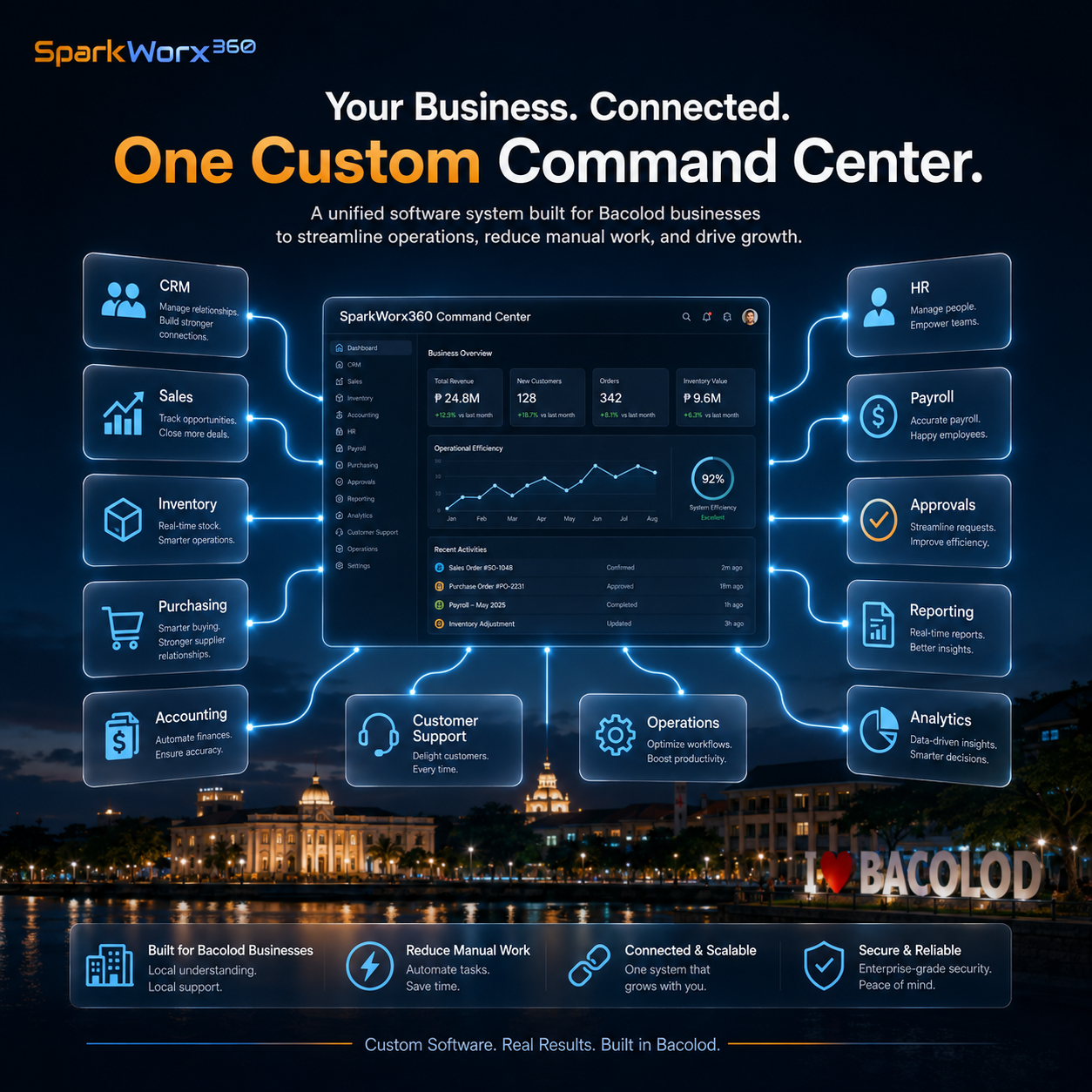
The system should follow the business requirement—not the other way around. Different industries therefore need very different software architectures and modules.
Connect several business functions such as operations, inventory, purchasing, finance, workflows and management reporting.
Track items, locations, stock movements, transfers, adjustments, reorder information and inventory reporting across operations.
Manage employee profiles, attendance, leave, approvals, payslips, HR documents and other internal workforce workflows.
Build ordering, reservation, billing, invoice or transaction workflows around specific customer and operational requirements.
Support units, tenants, reservations, collections, maintenance, facilities, documents and related property workflows.
Give customers, members, suppliers or other users controlled access to information, forms, status, documents and transactions.
Should You Build Custom Software or Use an Existing System?
Custom development is not automatically the better option. If reliable software already handles most of the requirement at a reasonable cost, using an existing platform may be faster and more practical.
Off-the-shelf software may make more sense when the business can operate effectively using established workflows and the required features already exist.
Custom software becomes more attractive when unique workflows, integrations, user roles, reporting or business rules cannot be handled efficiently by existing products.
Good Software Is More Than a Nice Dashboard
Users interact with screens, but a reliable business system also needs thoughtful rules behind those screens. Permissions, data structure, business logic, audit history, exceptions and reporting are often more important than visual effects.
Employees, managers, clients and administrators should only see or change the information appropriate to their responsibilities.
Business records should be organized so important information remains consistent across modules, transactions and reports.
The system should know which inputs are required, which actions are allowed and what should happen when normal conditions are not met.
Important actions, approvals and changes should be traceable when the business requires stronger internal control and accountability.
Where technically practical, systems can exchange data with compatible platforms to reduce unnecessary duplicate encoding.
Operational data becomes more valuable when management can turn it into useful dashboards, summaries, trends and decision information.
Signs Your Business May Have Outgrown Off-the-Shelf Tools
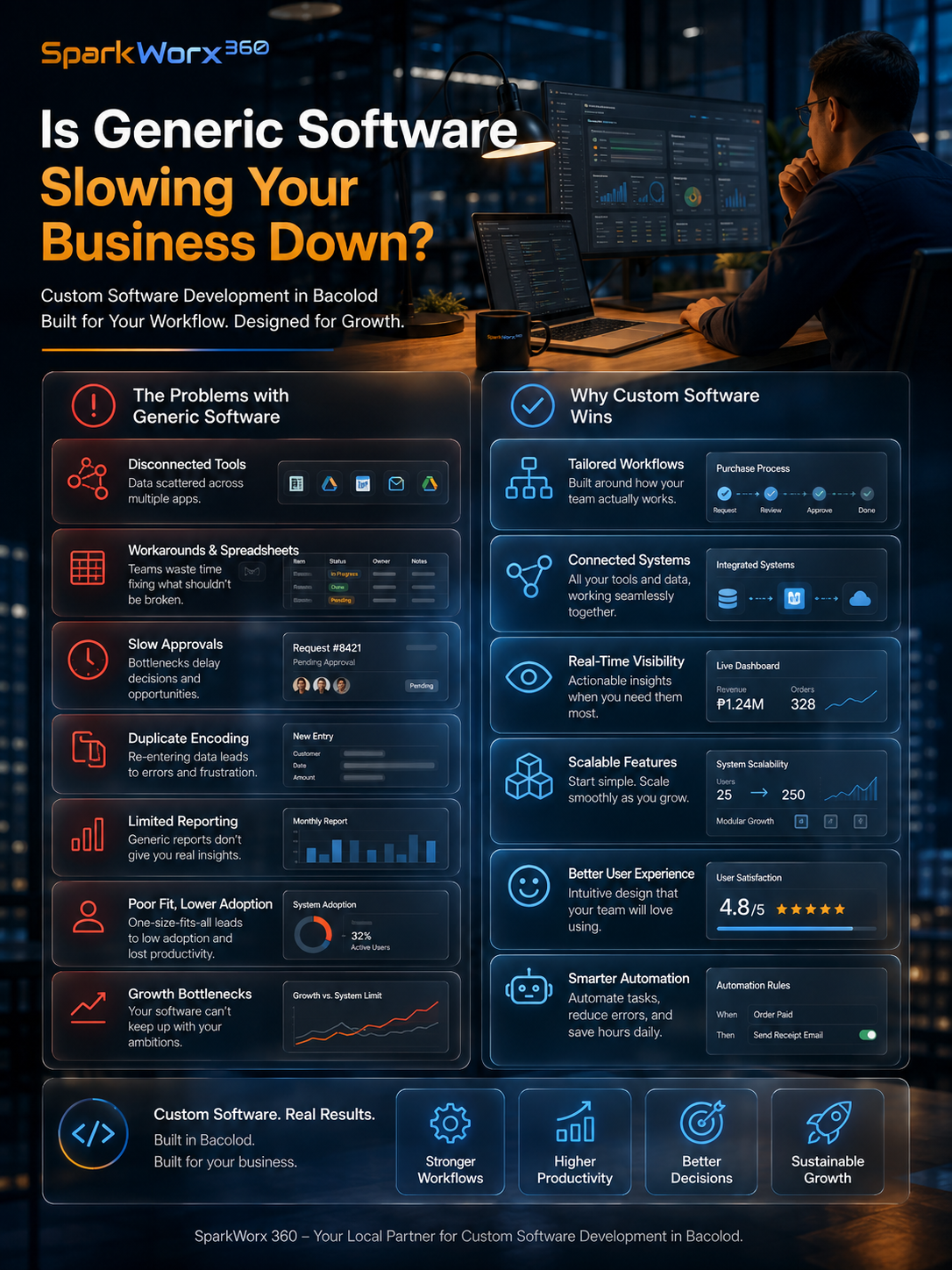
Custom software usually becomes a conversation after several workarounds have already accumulated. One platform handles customers, another handles inventory, spreadsheets hold the reports, chat messages contain approvals, and employees repeatedly move information between all of them.
This does not automatically mean the company needs a completely new system. But it does mean the existing setup deserves a proper review to determine whether integration, automation, process redesign or custom development is the better solution.
Common Custom Software Development Mistakes
Software developers need clear business requirements. If management cannot explain the process, building it immediately can simply digitize confusion.
A phased system can be easier to test, adopt and improve than an enormous project attempting to solve every future requirement immediately.
Even excellent software creates little value if users do not understand why it exists or continue using old spreadsheets outside the official process.
Business requirements, browsers, integrations, security needs and operational workflows change. Important systems require ongoing review and support.
Your Business May Not Need a Full Custom System
Sometimes the best solution is configuring software that already exists. Sometimes two systems simply need to exchange information. A repetitive approval may need workflow automation rather than a complete application.
Custom development should enter the picture when those simpler approaches no longer meet the requirement. Starting with the business problem rather than a predetermined technology usually produces a better investment decision.
Translate Business Problems Into Better Digital Systems
SparkWorx 360 can help businesses define software requirements, map workflows, determine the appropriate digital solution, coordinate system implementation, and connect technology decisions to broader operational objectives. Where specialized software development is required, implementation may involve collaboration with trusted development resources based on the project's technical scope.
Business automation focuses on reducing repetitive manual work and improving workflows. It may use tools that already exist. Custom software development goes further when the business needs its own application, database, modules, user roles, specialized reports or unique business logic. If you are still determining which direction is appropriate, review our Business Automation Bacolod resource first.
Custom Software Solutions for Bacolod Businesses
Growing businesses in Bacolod may eventually need systems that match their actual operating model. Distributors may need inventory and branch visibility. Hotels and property businesses may need reservation or property workflows. Restaurants may require ordering and operational systems. Employers may need HRIS and employee portals. Other organizations may require member, client, school, logistics, NGO, healthcare or specialized management systems.
Businesses that primarily need a public-facing online presence should instead review Website Development Bacolod . Companies that are still identifying operational bottlenecks may also benefit from Business Consulting Bacolod .
Development cost and timeline depend on the number of users, modules, workflows, permissions, integrations, reports, databases, migration requirements, security controls, hosting architecture, mobile requirements, testing needs and long-term support expectations. Complex systems should therefore be assessed before a final quotation or implementation timeline is provided.
Frequently Asked Questions About Custom Software Development in Bacolod
What is custom software?
Custom software is an application designed around the particular workflows, users, data, rules, reports and requirements of an organization rather than relying entirely on the predefined structure of generic software.
Is custom software better than ready-made software?
Not automatically. Existing software is often the better choice when it already solves the business requirement efficiently. Custom development becomes more valuable when important requirements cannot be handled adequately by available tools.
Can custom software include an ERP or inventory system?
Yes. Depending on requirements, custom development can include ERP modules, inventory management, operations, purchasing, HR, payroll, dashboards, reporting and other interconnected business functions.
How much does custom software development cost?
Pricing depends heavily on system scope, number of users, modules, integrations, workflows, reports, database complexity, security requirements, testing, deployment and ongoing support. A requirements review is normally needed before accurate pricing.
Can SparkWorx 360 help plan and implement a custom system?
Depending on the engagement, SparkWorx 360 can help assess business requirements, map workflows, plan the system, coordinate implementation and connect the solution to broader business processes. Specialized development may involve trusted technical development resources based on project requirements.
Your Business Should Not Have to Keep Working Around the Limitations of Its Software.
If your team relies on too many disconnected tools, spreadsheets are becoming difficult to control, existing software cannot support an important workflow, or your organization needs a system designed around the way it actually operates, talk to SparkWorx 360. We can help determine whether the right solution is integration, automation, customization, or a purpose-built business application.


