

BIR Compliance Should Be a System—Not a Monthly Emergency.
A practical guide to BIR tax filing, invoices, books of accounts, tax deadlines, taxpayer classification, and compliance support for businesses in Bacolod and Negros Occidental.
For many Filipino business owners, BIR compliance feels simple until the first filing deadline arrives. Suddenly there are forms, invoices, books of accounts, withholding taxes, VAT or percentage tax, income tax, attachments, payment channels, and questions such as “Ano ba talaga ang kailangan i-file?” Proper BIR tax compliance in Bacolod starts with understanding what your business is registered for and building a process that keeps your records ready before deadlines become urgent.
Do not copy another business's tax routine. Two companies operating beside each other can have different BIR obligations depending on their registration, taxpayer type, transactions, tax classification, employees, and industry.
What Does BIR Tax Compliance Actually Mean?
BIR compliance is not simply paying income tax once a year. A registered business may have recurring obligations involving income tax, VAT or percentage tax, withholding taxes, invoices, books of accounts, information returns, attachments, employee-related tax reporting, and other requirements depending on its registration.
The starting point is your BIR registration information. Business owners should understand which tax types apply, what forms are required, what supporting records must be maintained, and when filing or payment is due.
How to Manage BIR Tax Compliance for a Business
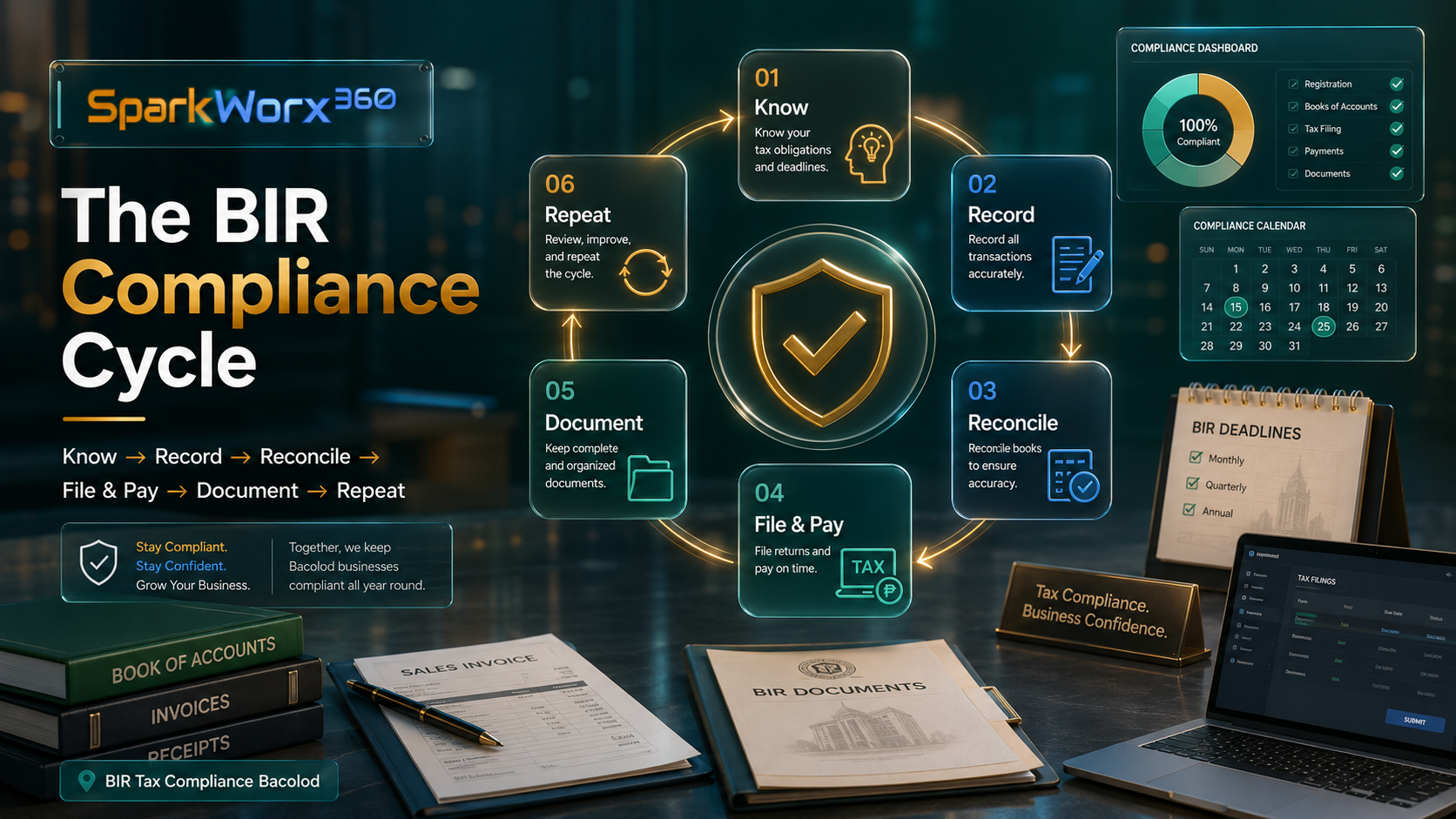
BIR Compliance Has Changed Under the Ease of Paying Taxes Framework
The Ease of Paying Taxes Act introduced several changes intended to simplify tax administration. Businesses should avoid relying entirely on old habits, old templates, or advice that may have applied before the newer rules.
Business taxpayers are now classified based on gross sales thresholds, which can affect how certain rules apply.
Current BIR rules under the EOPT framework provide updated invoicing requirements for business taxpayers.
New business taxpayers may register the appropriate type of books based on their chosen accounting setup and applicable BIR requirements.
BIR continues expanding online registration, update, filing, payment, and taxpayer-information services.
Do You Know Your BIR Taxpayer Classification?
Under current Ease of Paying Taxes rules, business taxpayers are classified according to annual gross sales. This is different from simply asking whether the business is a sole proprietorship or corporation.
BIR also provides a taxpayer-classification inquiry function through ORUS. Businesses should verify their actual registration and classification instead of assuming which category applies.
When Are BIR Tax Returns Due?
There is no single BIR deadline that applies to every business. Filing schedules depend on the tax type and return involved. Some obligations recur monthly, quarterly, or annually, while others arise only when a particular transaction happens.
For 2026, the BIR maintains an official Interactive Tax Calendar containing filing and payment schedules for income tax, withholding tax, VAT, percentage tax, documentary stamp tax, and other recurring requirements. The safest practice is to maintain a compliance calendar based specifically on your registered obligations.
Why BIR Compliance Becomes Stressful for Small Businesses
Most compliance problems do not begin because the owner intentionally ignored the BIR. They often begin because records are incomplete, responsibilities are unclear, filing is left until the last minute, or somebody assumed that another person was handling it.
A familiar SME situation is hearing “Akala ko na-file na.” That is exactly why tax compliance needs a documented process rather than memory, chat messages, or one employee's personal calendar.
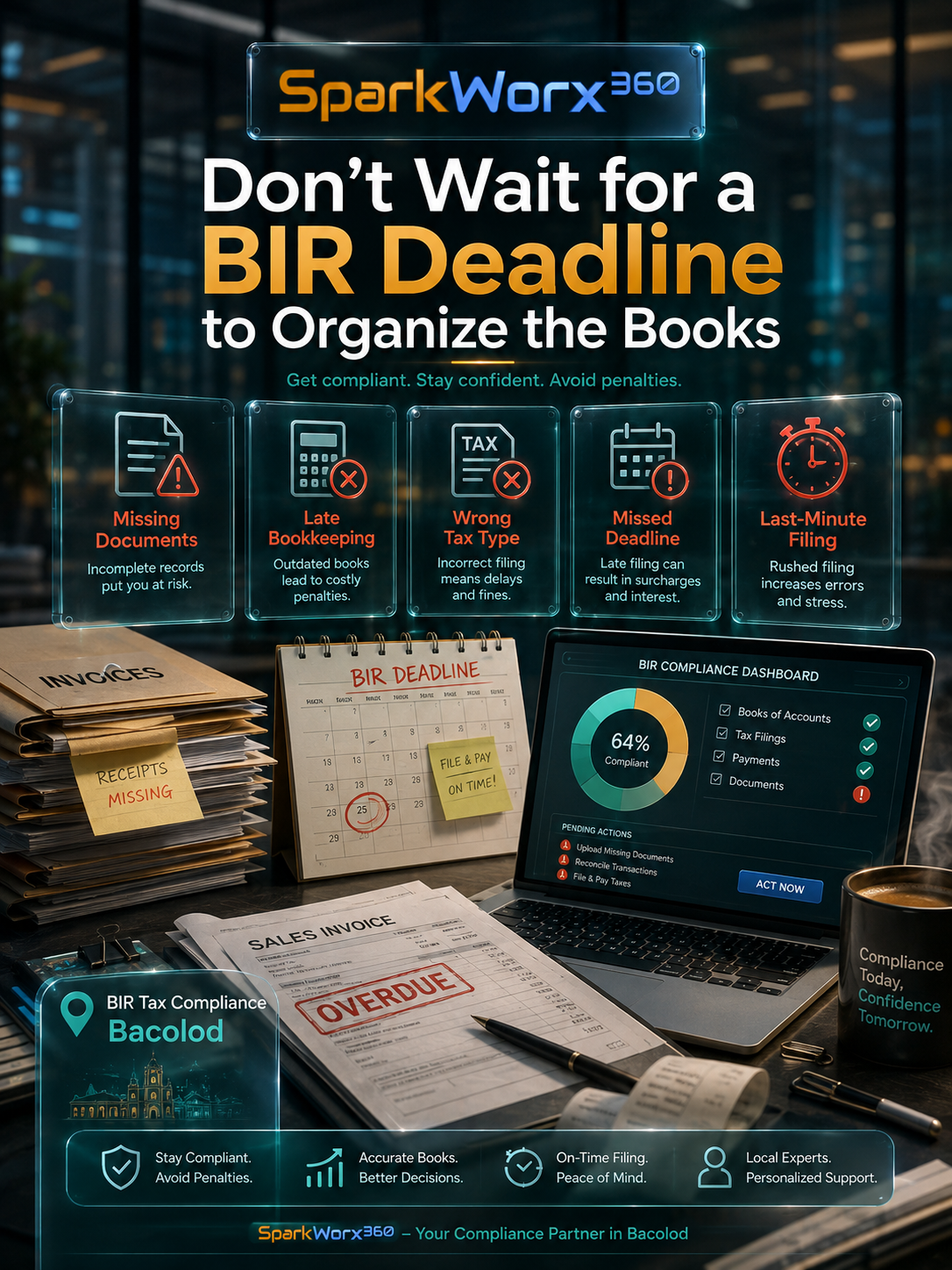
Common BIR Compliance Mistakes
Some registered tax obligations may still require filing even when there was little or no business activity. Always verify the requirements that apply to your registration.
Returns should come from properly maintained financial records, not figures assembled only because a deadline is approaching.
Philippine tax rules and administrative procedures change. Old forms, invoice practices, or procedures may no longer reflect current requirements.
Compliance schedules should be documented, monitored, and reviewable even when the employee or external provider normally handling them is unavailable.
When Should You Get Help With BIR Tax Compliance?
Professional support becomes especially valuable when the business has multiple tax types, employees, withholding obligations, VAT transactions, growing transaction volume, several branches, incomplete records, or management simply no longer has time to personally monitor every filing.
The goal is not to remove the business owner's responsibility. It is to build a clearer process so the right information is prepared, reviewed, filed, and documented on time.
Turn BIR Compliance From a Deadline Problem Into an Organized Business Process
SparkWorx 360 can support businesses in organizing the systems behind tax compliance. Depending on the agreed engagement, this may include bookkeeping coordination, BIR compliance monitoring, tax schedules, financial reporting, documentation, internal controls, payroll coordination, and accounting process improvement.
Tax compliance is connected to the rest of the business. Payroll affects withholding taxes. Sales affect VAT or percentage tax and income reporting. Inventory affects accounting records. Expansion creates new transactions, branches, and controls. By connecting accounting, HR, payroll, operations, and systems, businesses can build compliance into everyday operations instead of treating tax filing as a separate monthly emergency.
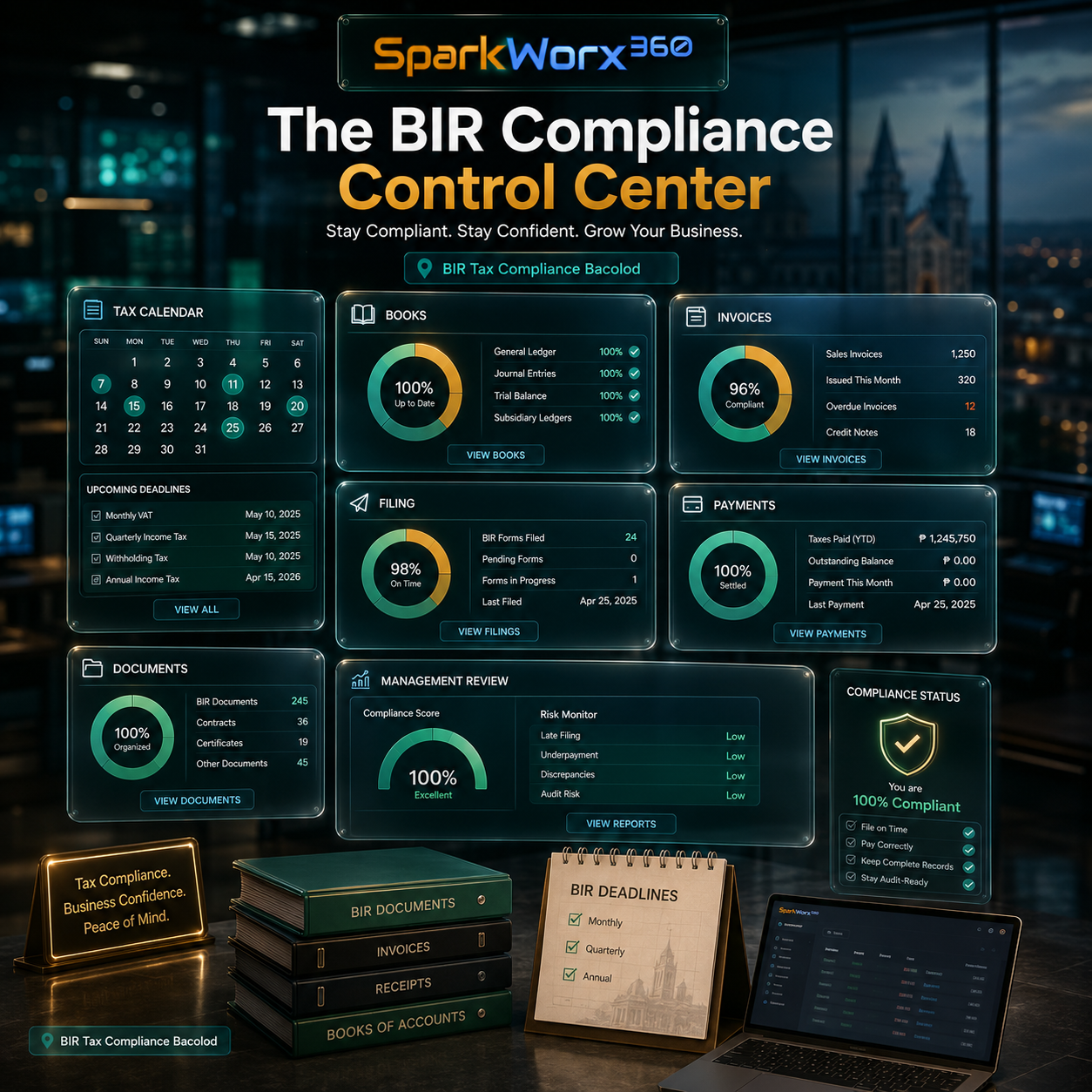
BIR Tax Compliance Support for Bacolod Businesses
Businesses located in Bacolod City generally transact under BIR Revenue District Office No. 77 for the appropriate RDO-related matters. Whether you operate a restaurant, retail store, professional practice, distribution business, family company, startup, or growing SME, keeping your BIR information, accounting records, and tax calendar organized becomes more important as the business grows.
If you are still setting up the company, you may also want to review our Business Registration Bacolod guide . For broader bookkeeping and financial reporting support, see our Accounting Services Bacolod resource .
Tax rules, forms, filing procedures, and administrative requirements may change. Check your actual Certificate of Registration, taxpayer classification, applicable tax types, and the latest official BIR issuances and tax calendar before filing. This page is a general business resource and should not be treated as individualized tax advice.
Frequently Asked Questions About BIR Tax Compliance in Bacolod
What BIR taxes does my business need to file?
It depends on your BIR registration, taxpayer type, transactions, employees, withholding obligations, and other circumstances. Review the tax types registered to your business.
Do I still need to file if my business had no sales?
Some registered tax obligations may still require filing even when there was no taxable activity. Verify the requirements that specifically apply to your registration.
Where can I check current BIR deadlines?
The BIR publishes an official Interactive Tax Calendar containing recurring filing, payment, attachment, and reporting schedules.
What BIR RDO covers Bacolod City?
Bacolod City is listed under Revenue District Office No. 77 in current BIR systems.
Can SparkWorx 360 help with BIR compliance?
Depending on the engagement, SparkWorx 360 can support bookkeeping, compliance schedules, BIR filing coordination, financial reporting, internal controls, payroll coordination, and accounting systems.
Stop Waiting for the Next Deadline to Find Out Whether Your Records Are Ready.
If your books are behind, tax deadlines keep becoming urgent, or you want a clearer BIR compliance process, talk to SparkWorx 360. We can help assess how your bookkeeping, filing calendar, reporting, and internal processes should work together.


